What a Buddhist blessing involves
A Thai Buddhist blessing is a serene, ritual-led ceremony in which a group of monks chant blessings over the couple and offer wishes for a long, prosperous and harmonious marriage. It is rooted in Thai Buddhist tradition and carries genuine cultural and spiritual weight — it is not a performance staged for tourists.
An odd number of monks typically leads the blessing (traditionally three, five, seven or nine — nine being especially auspicious). The couple sits before them, usually on the floor on cushions or mats, while the monks chant sutras in Pali.
The couple makes offerings to the monks — traditionally items such as food, flowers, candles and everyday necessities — as an act of merit-making. In return, the monks confer their blessing.
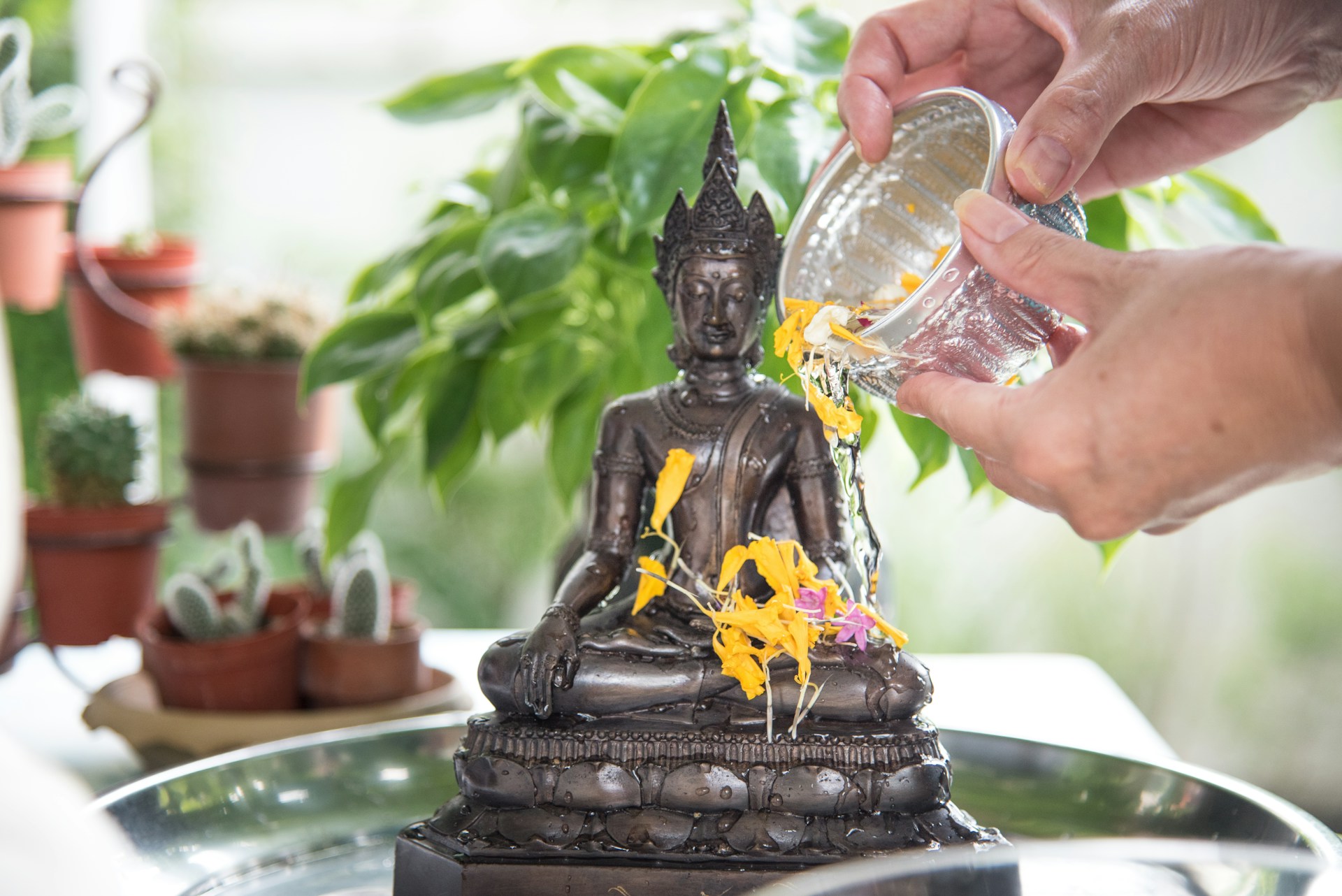
Sacred elements commonly feature: the pouring of holy water over the hands, the tying of white string (*sai sin*) around the wrists to symbolise unity and protection, and the anointing of the couple's foreheads with a paste mark.
The tone is calm and reflective rather than celebratory in the Western sense. There is no exchange of vows in the Western format and no "you may kiss" moment — this is a blessing of the union, not a legal contract or a scripted ceremony. Couples who understand this in advance find it deeply moving; those expecting a Western-style wedding can be caught off guard.